Salmonella typhi is the pathogen responsible for typhoid fever, a serious illness that can arise from contamination of food and water sources. This infection is quite common in places where sanitation is sub-par and it poses serious health challenges. There is no doubt that diagnosing the illness at an early stage is critical in extending the life of a patient and lowering the possibility of severe complications. For blood cultures, the diagnosis is far more complex as it spans several days and necessitates advanced machinery. But with the introduction of rapid test kits, this strategy has been transformed dramatically as these kits provide accurate results in a matter of minutes. They can be operated with minimal training and resources. Everyone, from doctors to patients, should know how these test kits function. We will discuss the importance of timely diagnosis as well as the workings of the kits in the context of effective disease management in the following blog.

The Importance of Early Diagnosis for Typhoid

Typhoid is difficult to detect due to its resemblance with the symptoms of common infections. Some symptoms such as fever lasting for a long time, weakness, loss of appetite, abdominal discomfort and diarrhea can lead to a wrong diagnosis if one is not prepared to take the test. If treatment is delayed, grave complications such as organ failure, intestinal perforation and even death can occur.

Early diagnosis helps in controlling the infection, saving the patient from unnecessary use of antibiotics that worsen the problem of resistance. Routine methods such as blood cultures consume a lot of time and are impractical in many resource constraint areas. Typhoid test kits come in handy at this stage because these help in the swift diagnosis of typhoid. Patients can be given immediate treatment and the outcomes are much better. Control of the disease improves drastically with their increased use in urban and rural areas for better health.

Working of Typhoid Test Kits

The working of a typhoid test kit involves the identification of specific antibodies or antigens within a patient’s blood, serum or urine.

Step 1: Collection of Sample

The first step involves the collection of a sample, in this case being blood, serum or urine. A finger prick blood sample is often enough for testing. Some kits may require venous blood extraction by a trained professional. The sample is then inserted into the appropriate tested region of the strip or cassette. If the sample is obtained properly, the chances of contamination are much lower which leads to accurate results.

Step 2: Add Reagents

After placing the sample in the designated area, a buffer solution or reagent is poured into the container. The reagent separates specific antibodies or antigens related to Salmonella typhi. The solution also helps in moving the sample over test strip. Proper application of reagents ensures that the test components are appropriately activated to interact with the sample presented to yield an accurate result.

Step 3: Antibody-Antigen Interaction

Many typhoid test kits are based on the principle of immunochromatography where a sample interacts with specific antigens or antibodies that had previously been fixed to the test strip. In other words, if there are any Salmonella typhi antibodies or antigens in the sample, they react with the sample and results in a visible response. The evidence found through this interaction is key as it helps establish whether the infection is new (presence of IgM antibodies) infection or is old (presence of IgG antibodies) in which case you have diagnostic information.

Step 4: Result Interpretation

Usually one line results is classified as negative (typhoid infection absent) and two lines positive (typhoid infection is present) although there are some advanced kits that can measure and differentiate the diagnostic responses of IgM and IgG for more clarity. Ensuring validation is key for ensuring that the next course of action to be taken is chosen like attending to the clinician or undertaking more conclusive examinations if necessary.

Step 5: Confirmation and Follow-Up

Confirmation via blood cultures or polymerase chain reaction testing may still be required for severe cases and epidemiological reasons, even if rapid test kits have proven to be quite accurate. Positive patients must also follow up to receive timely medical intervention in form of antibiotics. In order to minimize the likelihood of future infections, proper hygiene and preventative vaccinations is necessary.

Conclusion

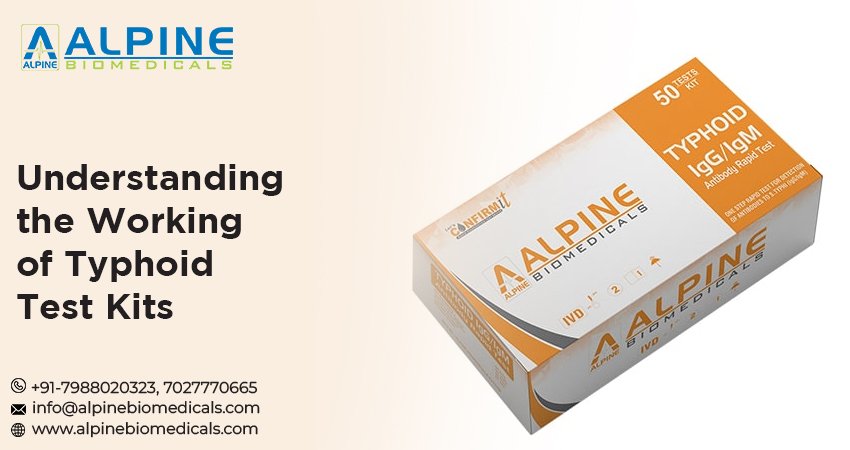
If you are in search of Typhoid Test Kits, Alpine Biomedicals adapts a reliable quality policy committed to design and manufacture rapid diagnostic kits. It provides products that exceed the needs and expectations of its customers with a commitment to satisfy applicable regulatory requirements.


Understanding the Working of Typhoid Test Kits

Salmonella typhi is the pathogen responsible for typhoid fever, a serious illness that can arise from contamination of food and water sources. This infection is quite common in places where sanitation is sub-par and it poses serious health challenges. There is no doubt that diagnosing the illness at an early stage is critical in extending the life of a patient and lowering the possibility of severe complications. For blood cultures, the diagnosis is far more complex as it spans several days and necessitates advanced machinery. But with the introduction of rapid test kits, this strategy has been transformed dramatically as these kits provide accurate results in a matter of minutes. They can be operated with minimal training and resources. Everyone, from doctors to patients, should know how these test kits function. We will discuss the importance of timely diagnosis as well as the workings of the kits in the context of effective disease management in the following blog.

The Importance of Early Diagnosis for Typhoid

Typhoid is difficult to detect due to its resemblance with the symptoms of common infections. Some symptoms such as fever lasting for a long time, weakness, loss of appetite, abdominal discomfort and diarrhea can lead to a wrong diagnosis if one is not prepared to take the test. If treatment is delayed, grave complications such as organ failure, intestinal perforation and even death can occur.

Early diagnosis helps in controlling the infection, saving the patient from unnecessary use of antibiotics that worsen the problem of resistance. Routine methods such as blood cultures consume a lot of time and are impractical in many resource constraint areas. Typhoid test kits come in handy at this stage because these help in the swift diagnosis of typhoid. Patients can be given immediate treatment and the outcomes are much better. Control of the disease improves drastically with their increased use in urban and rural areas for better health.

Working of Typhoid Test Kits

The working of a typhoid test kit involves the identification of specific antibodies or antigens within a patient’s blood, serum or urine.

Step 1: Collection of Sample

The first step involves the collection of a sample, in this case being blood, serum or urine. A finger prick blood sample is often enough for testing. Some kits may require venous blood extraction by a trained professional. The sample is then inserted into the appropriate tested region of the strip or cassette. If the sample is obtained properly, the chances of contamination are much lower which leads to accurate results.

Step 2: Add Reagents

After placing the sample in the designated area, a buffer solution or reagent is poured into the container. The reagent separates specific antibodies or antigens related to Salmonella typhi. The solution also helps in moving the sample over test strip. Proper application of reagents ensures that the test components are appropriately activated to interact with the sample presented to yield an accurate result.

Step 3: Antibody-Antigen Interaction

Many typhoid test kits are based on the principle of immunochromatography where a sample interacts with specific antigens or antibodies that had previously been fixed to the test strip. In other words, if there are any Salmonella typhi antibodies or antigens in the sample, they react with the sample and results in a visible response. The evidence found through this interaction is key as it helps establish whether the infection is new (presence of IgM antibodies) infection or is old (presence of IgG antibodies) in which case you have diagnostic information.

Step 4: Result Interpretation

Usually one line results is classified as negative (typhoid infection absent) and two lines positive (typhoid infection is present) although there are some advanced kits that can measure and differentiate the diagnostic responses of IgM and IgG for more clarity. Ensuring validation is key for ensuring that the next course of action to be taken is chosen like attending to the clinician or undertaking more conclusive examinations if necessary.

Step 5: Confirmation and Follow-Up

Confirmation via blood cultures or polymerase chain reaction testing may still be required for severe cases and epidemiological reasons, even if rapid test kits have proven to be quite accurate. Positive patients must also follow up to receive timely medical intervention in form of antibiotics. In order to minimize the likelihood of future infections, proper hygiene and preventative vaccinations is necessary.

Conclusion

If you are in search of Typhoid Test Kits, Alpine Biomedicals adapts a reliable quality policy committed to design and manufacture rapid diagnostic kits. It provides products that exceed the needs and expectations of its customers with a commitment to satisfy applicable regulatory requirements.